Introduction
The increasing reliance on data-driven decision-making has reshaped how organizations identify prospects, analyze markets, and manage customer information. In B2B environments, where relationships often begin with limited visibility into potential clients, access to structured and reliable data becomes an operational requirement rather than an optional advantage.
However, sourcing accurate business contact information remains challenging. Data fragmentation across platforms, inconsistencies in publicly available records, and frequent changes in company personnel all contribute to gaps in datasets. These limitations have encouraged the development of specialized platforms like Uplead that aggregate, validate, and organize business information into accessible formats.
What Is Uplead?
Uplead can be described as a B2B data intelligence platform that provides access to structured information about companies and professional contacts. It is commonly classified under sales intelligence and lead data platforms, though its applications extend to research and data management activities as well.
The platform aggregates information such as email addresses, job titles, company attributes, and industry classifications. One of its defining characteristics is the emphasis on data verification, where contact details are validated to reduce inaccuracies before being presented to users.
Rather than acting as a standalone operational system like a CRM, Uplead functions as a data provider that integrates into broader ecosystems. Users typically interact with it to extract, refine, or enrich datasets that are later used in other tools or processes.
From a structural perspective, platforms in this category aim to bridge the gap between scattered public data and actionable business intelligence. Uplead fits within this framework by organizing data into searchable and filterable formats that align with professional use cases.
Key Features Explained
Structured Search and Filtering System
Uplead provides a filtering interface that allows users to refine searches based on multiple attributes. These may include geographic location, company size, industry classification, and professional roles. This structured approach enables users to isolate relevant segments from large datasets.
Email Verification Mechanism
A notable component of the platform is its approach to verifying email addresses. Instead of relying solely on stored records, verification processes are applied to assess whether an email is active or deliverable. This helps improve the reliability of extracted contact information.
Company-Level Data Attributes
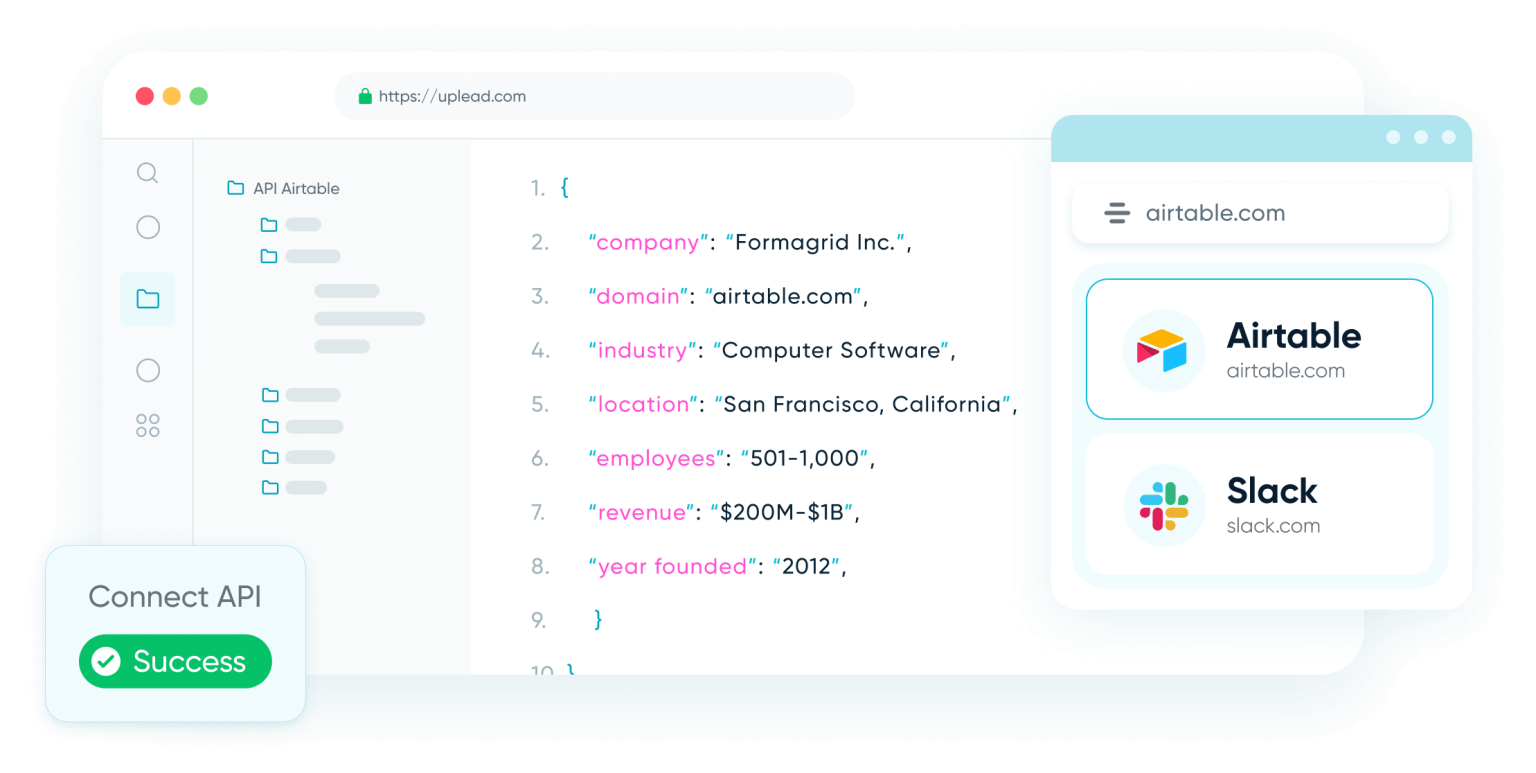
In addition to individual contact details, the platform includes firmographic data. This refers to information about organizations, such as employee count ranges, industry sectors, and operational characteristics. Such data is often used for segmentation and analytical purposes.
Data Enrichment Capabilities
Users can input their own datasets and enhance them by appending additional information. This enrichment process may fill missing fields, correct incomplete entries, or expand existing records with supplementary details. It is particularly useful for maintaining database consistency.
Technology and Industry Indicators
Some records include insights into the technologies used by companies or their operational focus. This type of information can support contextual analysis when evaluating potential business relationships or conducting industry studies.
Integration with External Systems
Uplead supports integration with commonly used business tools, allowing data to be transferred into CRMs or marketing platforms. These integrations reduce the need for manual data handling and help maintain continuity across workflows.
Common Use Cases
Building Targeted Prospect Lists
One of the primary applications involves generating lists of potential contacts based on predefined criteria. Users can define parameters such as job function, company size, or geographic region to identify relevant prospects.
Enhancing Existing Databases
Organizations often maintain internal records that may be incomplete or outdated. Uplead can be used to enrich these datasets by appending missing details and validating existing entries.
Supporting Market Analysis
Analysts may use aggregated company data to understand industry distributions, organizational structures, or regional patterns. This supports research activities that require structured business intelligence.
Assisting with Lead Qualification
Before engaging with potential contacts, users can evaluate whether a lead meets certain criteria. Access to firmographic and contact-level data helps in assessing relevance without initiating direct communication.
Data Validation Workflows
Teams responsible for maintaining databases may use verification features to reduce inaccuracies. This is especially relevant in environments where contact data is frequently updated or shared across departments.
Potential Advantages
Organized Data Access
The platform presents data in a structured format that allows users to apply filters and retrieve specific subsets. This reduces the complexity associated with unorganized or fragmented data sources.
Reduction of Manual Research Effort
Instead of sourcing information from multiple locations, users can access a centralized repository of business data. This consolidation can simplify research workflows.
Improved Data Reliability Through Verification
Verification processes applied to contact information can contribute to more dependable datasets. This is particularly relevant when accuracy is critical to downstream processes.
Compatibility with Existing Systems
Integration capabilities enable the platform to function alongside CRMs and other tools. This interoperability supports continuity in data management practices.
Scalability Across Different Use Cases
Whether for small-scale research or larger data operations, uplead platform can accommodate varying levels of usage. Users can adapt filtering and extraction methods according to their requirements.
Limitations & Considerations
Variability in Data Availability
The completeness of datasets may differ depending on industry, geography, or company size. Certain segments may have limited representation within the database.
Ongoing Data Maintenance Requirements
Business data is inherently dynamic. Changes in roles, company structures, and contact details mean that datasets require periodic updates to remain accurate.
Dependency on User Input Accuracy
The quality of results often depends on how well search filters and parameters are defined. Inaccurate or overly broad inputs may lead to less relevant outputs.
Learning Curve for Effective Use
Understanding how to apply filters, interpret results, and manage integrations may require time, particularly for users unfamiliar with data intelligence platforms.
Compliance and Responsible Usage
Handling business contact information involves adherence to data privacy and regulatory frameworks. Users must ensure that their usage aligns with applicable guidelines and organizational policies.
Who Should Consider Uplead
Professionals Working with B2B Data
Individuals involved in managing or analyzing business data may benefit from structured access to company and contact information.
Research and Analysis Teams
Those conducting market research or industry analysis can use aggregated datasets to identify patterns and trends.
Data Management Roles
Teams responsible for maintaining databases may use enrichment and verification features to improve data quality.
Organizations with Outreach Workflows
Groups that rely on identifying and organizing business contacts as part of their operations may find such platforms relevant to their processes.
Consultants Handling Client Data
Consultants working across industries may use B2B data platforms to support project-based research and reporting.
Who May Want to Avoid It
Users Without Data-Centric Requirements
Individuals whose activities do not involve structured data analysis or contact management may find limited applicability.
Non-B2B Contexts
The platform is designed for business-to-business data rather than consumer-focused datasets, making it less relevant for B2C-oriented tasks.
Minimal Data Usage Scenarios
Organizations with very limited need for external data sourcing may not fully utilize the platform’s capabilities.
Specialized Industry Requirements
In cases where highly niche or proprietary data is required, general-purpose B2B databases may not provide sufficient depth.
Comparison With Similar Tools
Uplead operates within a broader ecosystem of B2B data intelligence platforms that offer overlapping functionalities such as contact databases, filtering systems, and enrichment tools. While core features may appear similar across platforms, differences often emerge in data verification approaches, user interface design, and dataset coverage.
Some platforms emphasize extensive datasets with broad global coverage, while others focus on highly curated and verified records. Uplead is generally associated with balancing accessibility and verification, providing structured data alongside validation mechanisms.
Another point of differentiation lies in integration and usability. Certain tools prioritize advanced analytics or predictive insights, whereas Uplead is more aligned with foundational data access and management. Users often evaluate such platforms based on how well they integrate into existing workflows rather than standalone capabilities.
In addition, variations in data freshness, update frequency, and segmentation options can influence how each platform performs in specific use cases. Comparative evaluation typically depends on the nature of the task, whether it involves prospecting, research, or database maintenance.
Final Educational Summary
Uplead represents a category of tools designed to address challenges associated with accessing and managing business contact data. Its role is primarily centered on organizing structured datasets, enabling filtering, and supporting verification processes that enhance data reliability.
Rather than functioning as a complete business management system, it serves as a supplementary resource within broader data workflows. Its usefulness depends on how it is applied—whether for research, enrichment, segmentation, or validation.
Understanding platforms like Uplead requires viewing them within the context of data ecosystems, where multiple tools interact to support information flow across systems. In such environments, data intelligence platforms contribute by providing standardized access to business information that can be adapted to different operational needs.


