Introduction
Email communication operates within a complex technical environment where message delivery is not solely determined by sending an email. Modern mailbox providers rely on layered filtering systems that evaluate sender credibility before deciding whether a message reaches the primary inbox, is categorized as promotional, or is filtered into spam. These decisions are influenced by multiple signals, including sender behavior, domain history, authentication setup, and engagement patterns.
As email usage has scaled across industries, the need to maintain reliable deliverability has become increasingly important. New domains, inactive accounts, or accounts with inconsistent activity often lack sufficient reputation signals, which can affect how their messages are treated by filtering systems. In response to this challenge, structured behavioral approaches have been developed to help establish consistent sending patterns over time.
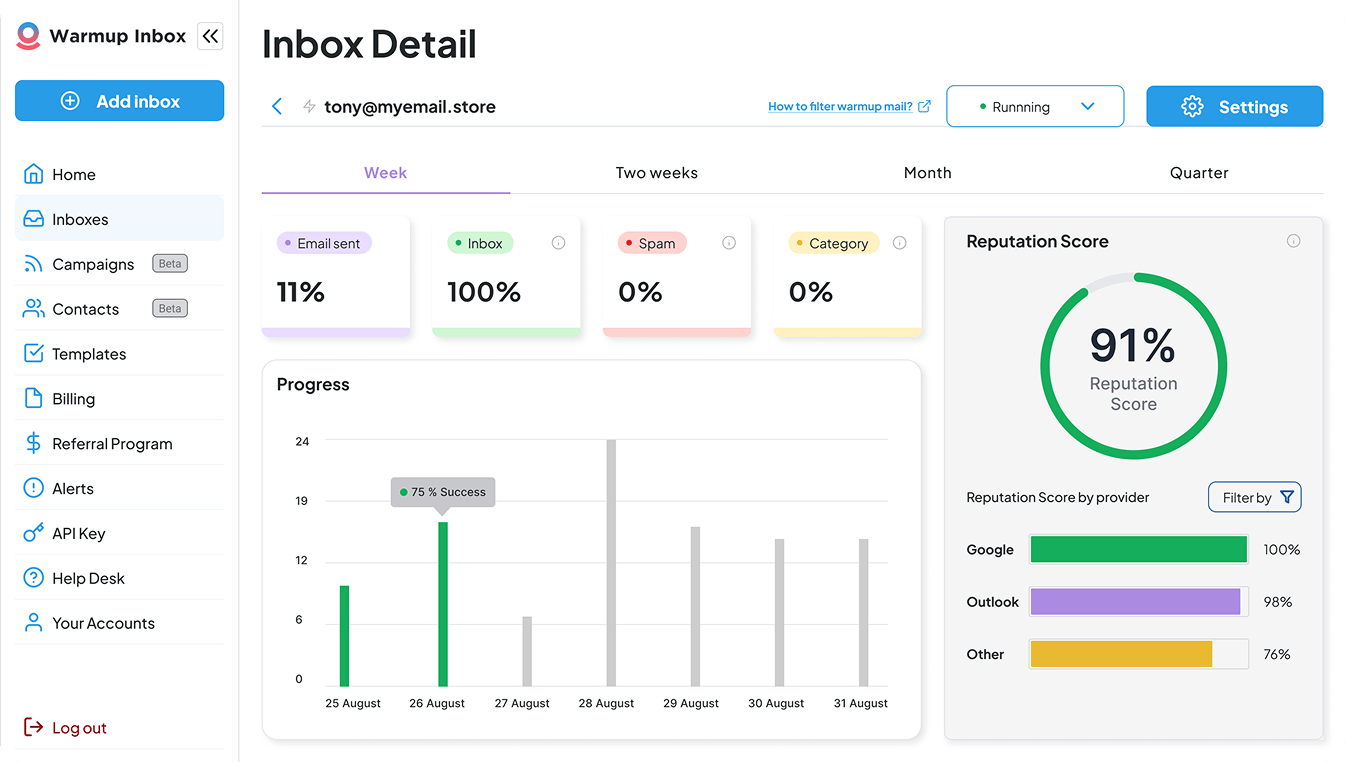
Inbox warm-up systems are one such approach. They simulate gradual and controlled email activity to create behavioral consistency that aligns with how mailbox providers evaluate legitimacy. Within this category, Warmup Inbox is positioned as a system that coordinates inbox interactions to generate engagement signals and support the development of sender reputation in a controlled manner.
Explore More About Warmup Inbox
What Is Warmup Inbox?
Warmup Inbox is a software-based system categorized under email deliverability and inbox reputation management tools. Its primary function is to simulate natural email activity through automated interactions between multiple connected inboxes.
The system works by linking a set of email accounts that participate in structured communication with one another. These accounts exchange messages, respond to emails, open conversations, and maintain threaded interactions. The objective is to create patterns of behavior that resemble organic communication rather than isolated or repetitive sending.
Rather than focusing on external recipients or campaign delivery, Warmup Inbox emphasizes internal network activity. This internal activity generates signals that mailbox providers may interpret as indicators of legitimate usage. Over time, these signals contribute to shaping sender reputation, which plays a role in determining how future emails are handled by filtering systems.
From a functional perspective, Warmup Inbox belongs to infrastructure-level systems that influence email behavior patterns. It does not operate as a content creation or outreach platform but instead focuses on the underlying behavioral layer of email communication.
Key Features Explained
Inbox warm-up systems incorporate multiple mechanisms designed to simulate realistic communication behavior. Warmup Inbox applies these mechanisms through structured automation and network-based interactions.
Network-Based Inbox Interactions
The system connects multiple inboxes into a coordinated network. Messages are exchanged between these accounts in a way that resembles conversational communication. These interactions include sending emails, receiving replies, and continuing discussions across threads, forming interconnected communication flows.
Gradual Increase in Sending Activity
One of the core principles of inbox warm-up is the controlled scaling of email volume. Activity begins at a low level and increases progressively over time. This gradual expansion reflects patterns typically associated with established email accounts that build activity naturally rather than abruptly increasing volume.
Engagement-Oriented Signals
Mailbox providers often evaluate engagement-related signals such as opens and replies. Warmup Inbox incorporates simulated engagement within its network, ensuring that messages are not only transmitted but also interacted with. These interactions contribute to a more complete representation of email behavior.
Distributed Communication Structure
Instead of concentrating all activity within a single inbox, interactions are distributed across multiple accounts. This distribution reduces repetition and introduces variability in communication paths, which contributes to more diverse behavioral patterns.
Timing Variability in Messaging
Email timing is another factor considered in behavioral evaluation. The system introduces variation in sending intervals, response times, and message exchanges. This variability helps replicate irregular communication patterns that are commonly observed in natural email usage.
Common Use Cases
Inbox warm-up systems are used in scenarios where maintaining consistent email behavior is important for deliverability and reputation building.
Establishing New Email Domains
New domains begin without historical reputation data. Mailbox providers have limited information to evaluate their credibility. Warm-up systems introduce controlled activity to help build initial behavioral signals that contribute to reputation formation.
Preparing Email Infrastructure for Usage
Organizations that depend on email communication often require stable behavior before scaling their operations. Warm-up processes help ensure that email accounts demonstrate consistent activity patterns prior to broader usage.
Reactivating Dormant Email Accounts
Email accounts that have remained inactive for extended periods may experience reduced deliverability performance. Gradually reintroducing activity helps restore behavioral consistency and rebuild recognition signals.
Managing Multiple Email Accounts
In environments where several inboxes are used simultaneously, maintaining uniform behavior across accounts becomes important. Warm-up systems help coordinate interactions across these accounts to ensure consistent patterns of activity.
Potential Advantages
Inbox warm-up systems provide structured approaches to managing email behavior over time. Their advantages are primarily associated with consistency and controlled progression.
Controlled Behavior Development
The gradual increase in activity reduces abrupt changes in sending patterns. This controlled progression aligns with expected behavior from legitimate email users.
Consistency Across Multiple Accounts
Automation ensures that inboxes follow similar interaction patterns. This reduces inconsistencies that may arise from manual handling of email activity.
Stable Activity Patterns Over Time
Continuous and consistent activity contributes to a stable behavioral profile. Stability is a factor that mailbox providers may consider when evaluating sender credibility.
Distributed Interaction Modeling
Using multiple inboxes allows communication to occur across a network rather than a single account. This distributed structure reflects interconnected communication patterns more accurately than isolated activity.
Limitations and Considerations
While inbox warm-up systems address certain behavioral aspects, they exist within a broader ecosystem of deliverability factors.
Influence of Email Content Quality
The structure, relevance, and consistency of email content remain important. Even with established warm-up activity, messages that lack clarity or coherence may still be filtered.
Differences in Mailbox Provider Evaluation
Different providers use distinct filtering criteria. As a result, behavior interpreted positively in one system may not produce identical outcomes in another.
Dependence on Technical Configuration
Deliverability is influenced by authentication mechanisms, domain setup, and infrastructure configuration. Warm-up systems do not directly manage these elements but operate alongside them.
Simulated Nature of Interactions
Although designed to replicate natural communication patterns, the interactions occur within a controlled system. This means the behavior is modeled rather than fully organic.
Who Should Consider Warmup Inbox
Warmup Inbox is relevant in environments where structured email behavior is required for consistent deliverability outcomes.
Infrastructure and System Administrators
Individuals managing email systems may use warm-up processes to ensure consistent behavior across domains and accounts.
Technical Teams Handling Communication Systems
Teams operating automated or semi-automated email workflows may incorporate warm-up systems to stabilize sending behavior before scaling operations.
Analysts Studying Deliverability Patterns
Professionals analyzing email performance may observe how controlled activity influences sender reputation and engagement signals over time.
Organizations Managing Multiple Inboxes
Environments that involve multiple email accounts benefit from synchronized behavior across all inboxes, which warm-up systems help maintain.
Who May Not Need It
Inbox warm-up systems are not necessary in every scenario.
Personal Email Usage
Individuals using email for personal communication typically do not require structured warm-up processes, as natural usage patterns develop organically.
Low-Volume Email Activity
If email usage is minimal, the impact of warm-up processes may be limited.
Established Domains with Consistent History
Domains with long-standing and consistent activity may already possess sufficient reputation, reducing the need for additional warm-up behavior.
Comparison With Similar Systems
Inbox warm-up systems occupy a distinct position within the broader email ecosystem.
Compared to Email Sending Platforms
Email sending platforms are designed for composing and delivering messages to recipients. Warm-up systems focus on preparing behavioral patterns before large-scale sending.
Compared to Email Validation Tools
Validation tools verify email addresses to reduce bounce rates. Warm-up systems do not validate recipients but focus on sender-side behavior.
Compared to Monitoring Tools
Monitoring tools track metrics such as delivery rates and engagement statistics. Warm-up systems actively generate activity rather than only observing outcomes.
Compared to Manual Email Handling
Manual sending relies on human consistency, which may vary. Warm-up systems provide structured, repeatable patterns that maintain uniform behavior over time.
Final Educational Summary
Inbox warm-up systems represent a structured method for developing email sender reputation through controlled behavioral simulation. Warmup Inbox operates within this category by coordinating interactions across multiple inboxes, generating patterns that resemble natural communication over time.
The concept is based on how mailbox providers evaluate trust signals derived from sender behavior, engagement, and consistency. Gradual increases in activity, distributed interactions, and variable timing contribute to forming recognizable behavioral profiles that can be assessed by filtering systems.
However, inbox warm-up systems function as one component within a broader deliverability framework. Email content quality, technical configuration, authentication protocols, and recipient interaction all play important roles in determining final delivery outcomes. A complete understanding of email deliverability requires considering these interconnected factors together rather than relying on a single mechanism.


